Nutrition
Do you need a fiber supplement if you eat fiber-rich foods?
Start with your meals and your reason for considering a supplement. Explore food sources, constipation guidance and questions to ask before adding fiber.
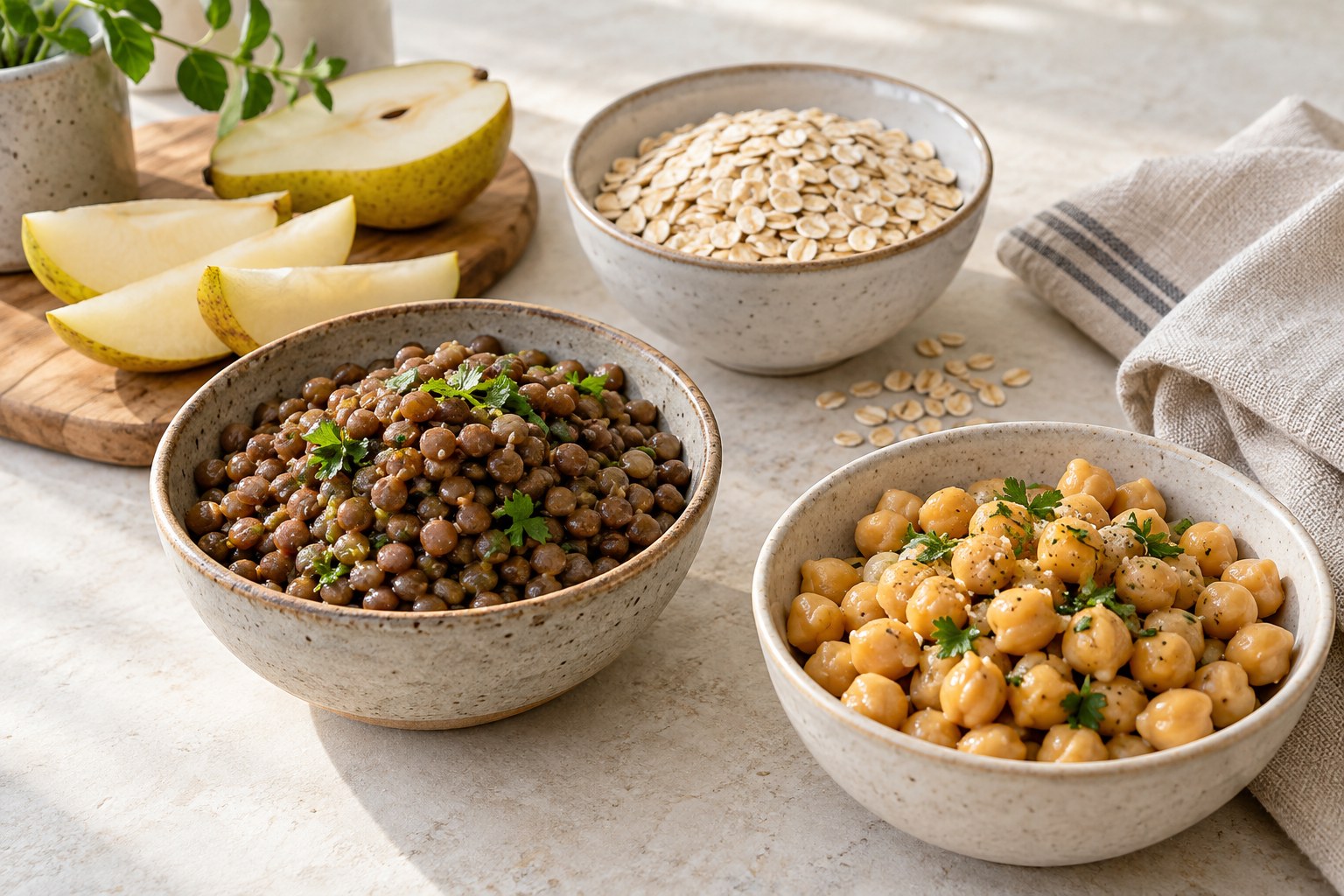
Illustration generated with AI for UpCare Health. It does not depict a study participant or a clinical result.
A tub of fiber powder can look like a simple answer to an uncertain diet. But before adding it to breakfast, ask what you want it to do. Are you trying to include more fiber, manage constipation or follow a clinician's recommendation?
Those are different starting points. Eating fiber-containing foods does not automatically tell you whether your intake meets your needs. Equally, seeing a supplement advertised does not establish that you need one.
Start with the foods already in your day
NIDDK lists whole grains, beans and lentils, fruit, vegetables and nuts as fiber sources. Its constipation guidance recommends adding fiber gradually and drinking enough liquids to help it work. Individual fluid needs depend on circumstances and health.1
For a practical review, think through an ordinary day rather than an unusually balanced one. Where do those foods appear? Could breakfast include oats, lunch include beans or a snack include fruit? These are possible additions, not a required menu or a reason to restrict foods you enjoy.
What role can a supplement play?
NIDDK includes fiber supplements among the over-the-counter options a health professional may recommend for constipation. Its guidance also discusses meals, physical activity, bathroom habits and medicines that may contribute to symptoms.2
That is a reason to match the approach to the problem. A question such as “I still strain despite these changes; what should we try next?” gives a clinician or pharmacist more useful information than “Which fiber product is best?”
If a supplement is recommended, ask how to take that particular product, what fluids it requires and how it fits with your medicines. Bring the label to the conversation. This article does not set a dose or assume that different products are interchangeable.
More fiber is not the answer to every symptom
Constipation has several possible causes, including some medicines and medical conditions. If self-care is not helping, seek medical advice. Constipation with blood in the stool, constant abdominal pain, vomiting or inability to pass gas needs prompt assessment.3
Do not keep adding products while an unexplained problem persists. Nor should you stop prescribed medicines without discussing them with a health professional.2
Make the decision specific
Write down your goal, what you currently eat and what symptoms you notice. The useful outcome is a plan that fits your needs and daily life. A supplement may have a role in that plan; buying one is not, by itself, evidence of better digestive health.
A quick check-in
Did you find this story useful?
Sources
For general information. This story does not provide a diagnosis or replace individual medical advice.