Health
Why your hair can shed months after a stressful event
Noticing more hair months after a stressful event? Learn about delayed hair shedding, recovery and when to speak with a dermatologist.
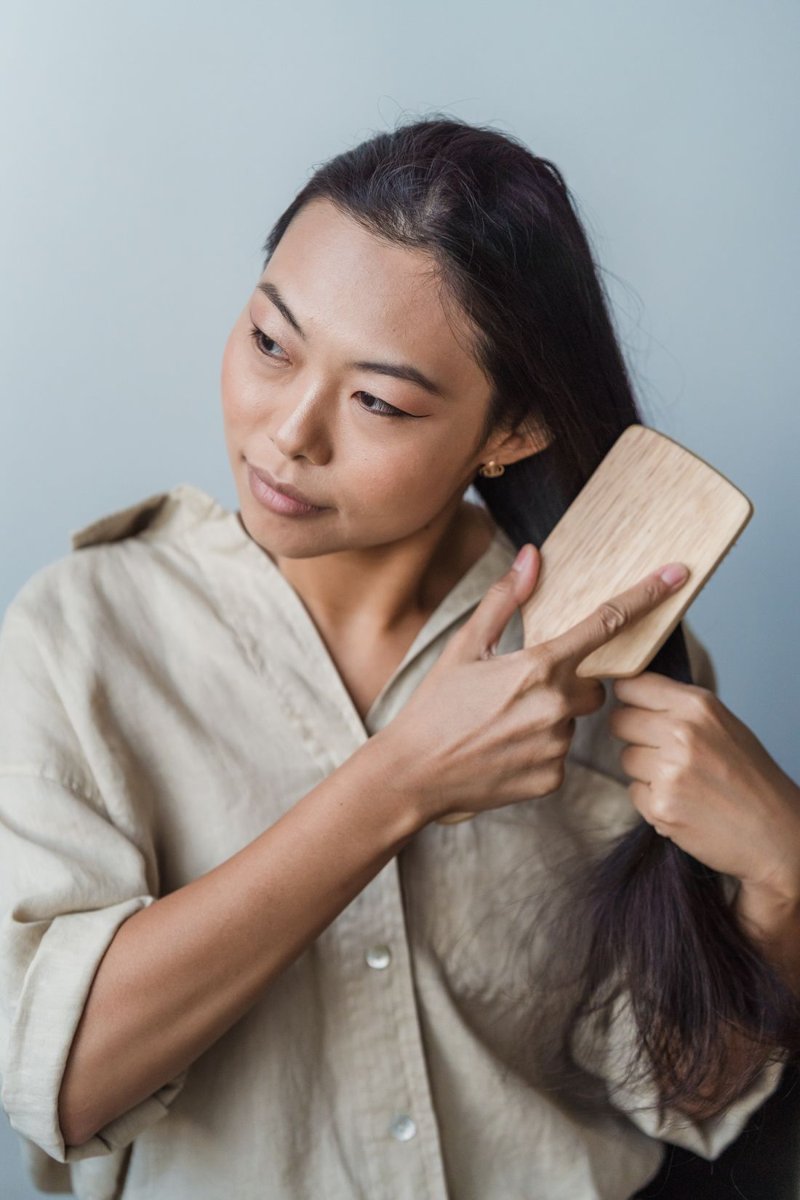
The difficult weeks are behind you. Life feels more settled. Then you notice more hair on your brush and wonder why this is happening now.
Hair shedding after stress can appear months after the event that triggered it. That delay can make the connection easy to miss.
Why does shedding start later?
The American Academy of Dermatology describes excessive shedding called telogen effluvium, which can follow significant emotional stress, illness, surgery or childbirth. People often notice it a few months afterward.1
A recent change in your hair may therefore be connected to something that happened earlier.
Will your hair recover?
Temporary shedding often settles as the body readjusts. The AAD notes that hair commonly returns to its usual fullness within six to nine months. Ongoing stress can prolong shedding, and recovery varies.1
When should you ask for help?
A dermatologist can distinguish excessive shedding from other forms of hair loss, which may occur together. If the amount concerns you, an assessment can help identify the cause and what to expect.
The timeline is a useful clue, rather than a diagnosis.
Build a timeline before choosing an explanation
Imagine noticing extra shedding in October. Your first thought may be a new shampoo you bought last week. But you also had a fever in July and several difficult weeks afterward. Writing those events on one page creates a more useful question: could the earlier period matter? This is an illustrative situation, not a diagnosis. The value of the timeline is that it keeps an obvious recent change from crowding out everything else.
Include the beginning of the shedding, any illness or surgery, changes in medication, pregnancy or childbirth, and substantial changes in eating or weight. You do not need to reconstruct every meal or stressful conversation. A few dates and a description of the pattern are enough to start. The aim is to give a clinician a clear account, rather than to decide on a cause before your scalp has been examined.
Shedding and hair loss are different questions
The AAD distinguishes excessive shedding from conditions in which hair stops growing normally. They can also occur together. That is why recognizing the familiar delay after a stressful event does not settle every case.1 Ask what pattern you are seeing: more strands coming away, a gradually wider part, a distinct bare area, or discomfort on the scalp. Describe what you observe without forcing it into a medical label.
Think about the difference between an observation and an interpretation. “I started noticing more hair when I wash it” is an observation. “My shampoo destroyed my follicles” is an interpretation. The first leaves room to investigate. The second may send you shopping for a solution that does not fit the problem. A useful article can help you formulate questions, but it cannot examine your hair, your skin or your medical history.
Make observation manageable
It can be tempting to count every strand or photograph your part several times a day. That creates a large amount of information without necessarily making the pattern clearer. If you choose to keep a record, decide beforehand what you will note and how often. For example, take an occasional photograph with the same parting and lighting, and write one sentence about whether the shedding seems similar, increasing or easing.
A record is useful when it helps you explain a concern. If keeping it makes you monitor yourself constantly, simplify it. You can also record the questions you want answered: Is this shedding or another form of hair loss? Are there signs of more than one process? What improvement would we expect, and when should I return? Those questions make the appointment more concrete without requiring you to become your own dermatologist.
Recovery is a pattern, not a deadline
The recovery range described in guidance is an expectation across many experiences, not a promise about an exact month. A stressful event ending and hair appearing fuller are also different milestones. The visible change may lag behind the event, so judge your situation with the timeline in mind rather than using how you felt yesterday as the only reference.
If you are worried, you do not have to wait until an article's timeline has elapsed to ask for help. Explain the concern and its effect on your life. Bring the products or supplements you have started as well as the original history. The goal of that conversation is a useful assessment and plan, not a test of whether you were patient enough. Understanding the delay can make shedding less mysterious while leaving room for individual care.
What does that mean to you?
The delay is the part most people miss. If shedding begins today, think back several months rather than only to this week. Illness, surgery, childbirth, a major emotional event or a sharp dietary change may belong on that timeline.
Research gives us the usual pattern, but your experience helps show whether your hair is following it. Note when shedding started, whether it is slowing and whether you see patchy loss, scalp symptoms or other changes. Photographs taken under similar light can be more useful than checking the mirror repeatedly. Bring persistent or concerning changes to a dermatologist.
The difficult weeks are behind you. Life feels more settled. Then you notice more hair on your brush and wonder why this is happening now.
Hair shedding after stress can appear months after the event that triggered it. That delay can make the connection easy to miss.
Why does shedding start later?
The American Academy of Dermatology describes excessive shedding called telogen effluvium, which can follow significant emotional stress, illness, surgery or childbirth. People often notice it a few months afterward.1
A recent change in your hair may therefore be connected to something that happened earlier.
Will your hair recover?
Temporary shedding often settles as the body readjusts. The AAD notes that hair commonly returns to its usual fullness within six to nine months. Ongoing stress can prolong shedding, and recovery varies.1
When should you ask for help?
A dermatologist can distinguish excessive shedding from other forms of hair loss, which may occur together. If the amount concerns you, an assessment can help identify the cause and what to expect.
The timeline is a useful clue, rather than a diagnosis.
Build a timeline before choosing an explanation
Imagine noticing extra shedding in October. Your first thought may be a new shampoo you bought last week. But you also had a fever in July and several difficult weeks afterward. Writing those events on one page creates a more useful question: could the earlier period matter? This is an illustrative situation, not a diagnosis. The value of the timeline is that it keeps an obvious recent change from crowding out everything else.
Include the beginning of the shedding, any illness or surgery, changes in medication, pregnancy or childbirth, and substantial changes in eating or weight. You do not need to reconstruct every meal or stressful conversation. A few dates and a description of the pattern are enough to start. The aim is to give a clinician a clear account, rather than to decide on a cause before your scalp has been examined.
What does that mean to you?
The delay is the part most people miss. If shedding begins today, think back several months rather than only to this week. Illness, surgery, childbirth, a major emotional event or a sharp dietary change may belong on that timeline.
Research gives us the usual pattern, but your experience helps show whether your hair is following it. Note when shedding started, whether it is slowing and whether you see patchy loss, scalp symptoms or other changes. Photographs taken under similar light can be more useful than checking the mirror repeatedly. Bring persistent or concerning changes to a dermatologist.
A quick check-in
Did you find this story useful?
Sources
For general information. This story does not provide a diagnosis or replace individual medical advice.