Hair & scalp
Hair Loss: Could a Vitamin or Mineral Deficiency Be Involved?
Deficiencies can contribute to hair loss, but supplements are not a universal fix. Learn what patterns to report and how to discuss testing.
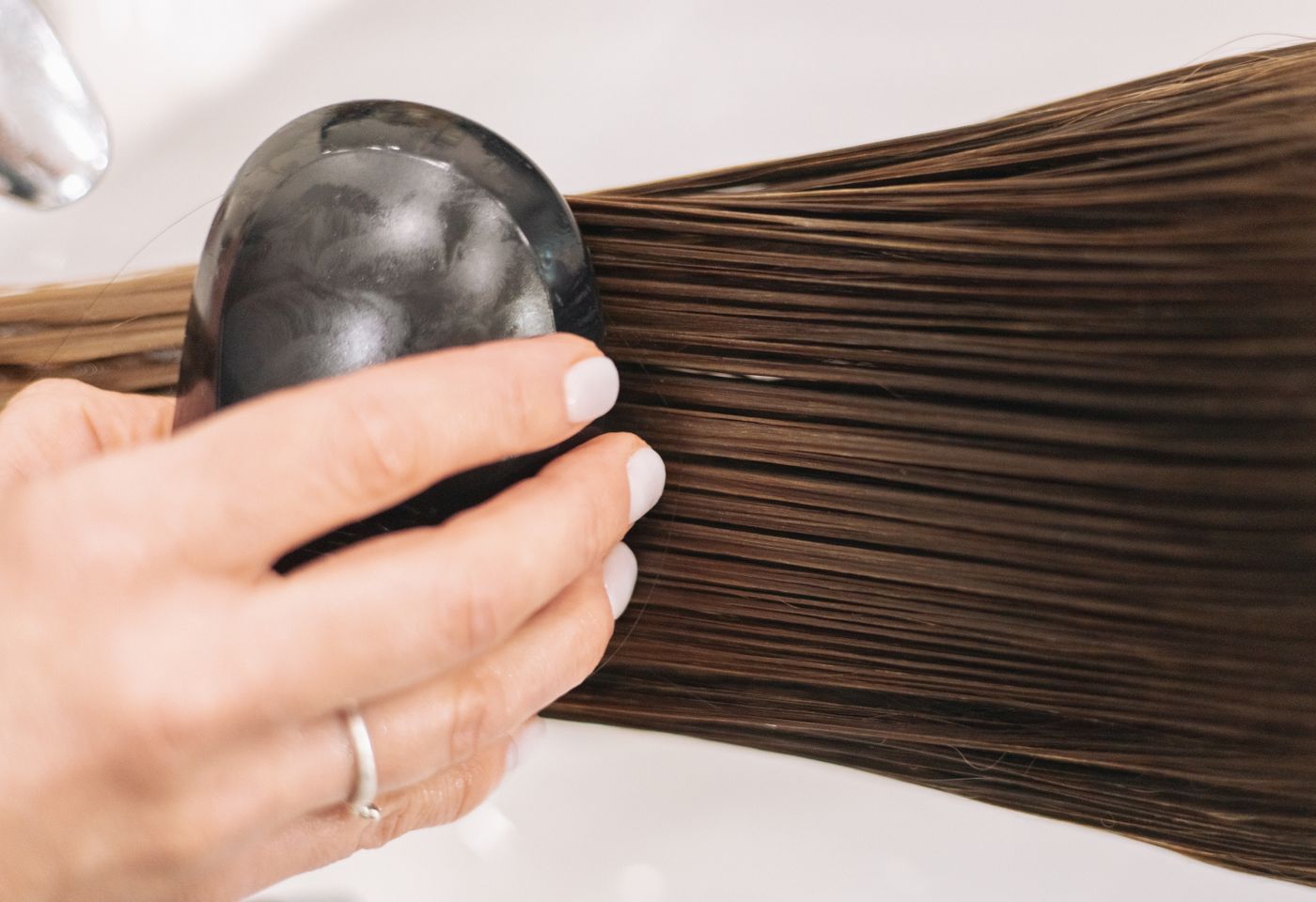
More hair in the shower can feel alarming
You wash your hair and notice a larger clump than usual. Then you start looking at your brush, your pillow and the part in your hair. Before long, the question becomes urgent: am I missing a vitamin? It is an understandable place to start, especially when hair supplements seem to offer a simple answer to a problem that feels very personal.
Nutrition can matter. Inadequate iron, zinc or protein can contribute to hair loss. But hereditary patterns, thyroid disease, scalp conditions, medicines and other causes can also be involved. The appearance of shed hair does not identify which explanation applies to you. A useful first step is to describe the change, rather than choosing a nutrient and hoping it is the missing piece.1
Try naming what you see: more loose hairs, a gradually widening part, a receding hairline, a distinct patch or broken strands. Those descriptions are not diagnoses, but they give a clinician a better starting point than “my hair is bad.” They also help separate a concern about color or texture from a concern about how much hair you have.
Why the timeline matters more than you might think
Increased shedding can appear months after illness, childbirth, major stress or substantial weight loss. That delay is easy to overlook. You may blame a shampoo you bought last week when the more relevant event happened much earlier. A common temporary shedding pattern is called telogen effluvium; a clinician can help determine whether that description fits your experience.3
Think back through the months before the change. Were you ill? Did your eating pattern change significantly? Did you start or stop a medicine? Have you been through an unusually demanding period? Write down approximate dates. If you cannot remember exactly, “around the beginning of summer” is still useful. You do not need to reconstruct every day to have a productive appointment.
Temporary shedding and ongoing hair loss are not always the same problem, and they can coexist. Some shedding improves as the trigger resolves, whereas hereditary thinning may need a different plan. That is why a reassuring story from someone else can be comforting without being a reliable forecast for you.3
Avoid turning the timeline into self-blame. Learning that a change followed a difficult period is not proof that you caused it by handling life badly. The purpose is to identify what may need attention now. Bring the information to someone who can assess it, rather than trying to turn every past event into a certain explanation.
What vitamins and minerals can, and cannot, do
If an examination and appropriate testing identify a deficiency, correcting it may be part of treatment. That is very different from assuming that everyone with shedding needs iron, zinc or biotin. A dermatologist can decide whether blood tests or another investigation are useful based on the pattern and your history. There is no single supplement that addresses every cause of hair loss.2
Ask what a proposed test is supposed to answer. “Are we checking for a likely cause in my case?” and “What would change if the result is low?” are reasonable questions. If you already have recent test results, bring them. A careful interpretation is more helpful than collecting a long list of numbers without knowing what any of them means for your plan.
Biotin deserves a closer look because it appears in so many hair products. Deficiency is rare, and evidence that extra biotin improves hair in people without a deficiency is limited. Biotin supplements can also interfere with some laboratory tests, including certain hormone tests. Tell your clinician and laboratory what you take; ask whether preparation is needed rather than choosing a stopping interval yourself.5
More is not automatically better. Taking too much of certain nutrients can contribute to hair loss, and high zinc intake can reduce copper levels. A hair gummy, multivitamin and separate mineral supplement may overlap. Review the combined labels before adding another product, especially when each package makes its dose sound modest in isolation.46
Care for your hair while you investigate
You do not need to stop caring for your hair until you have an answer. Gentle handling, avoiding tightly pulling styles and reducing harsh treatments can limit additional damage. A balanced eating pattern with adequate nourishment supports health; aggressive restriction is not a good hair-care strategy. These measures are supportive, but they cannot substitute for treatment of a condition that needs medical attention.4
Keep the routine manageable. If you introduce a serum, supplement, shampoo and scalp treatment at the same time, you may struggle to tell what irritated your skin, what made no difference or what is simply too expensive to continue. Make a list of what you already use before buying anything new. That also makes it easier to explain your routine during an assessment.
Photos can be a practical way to document the change. If you choose to take them, use similar lighting and the same view of your part or hairline. Treat the images as a record for your consultation rather than a daily verdict on whether you are improving. A photograph taken after styling is not directly comparable with one taken under harsh bathroom lighting with wet hair.
Be cautious about comparing your progress with a stranger's before-and-after pictures. You may not know their diagnosis, what treatments they used or whether the images were taken consistently. A useful comparison is your own starting point, interpreted alongside the plan and the timescale your clinician explained.
Leave the appointment with more than a product name
Seek assessment for sudden, patchy or persistent loss, especially if you also have scalp discomfort, itching or visible skin changes. Mention these details clearly. If you suspect a medicine, ask about it rather than stopping prescribed treatment yourself. The aim is to understand the cause without creating another health problem along the way.1
Bring three things: a short timeline, a list of medicines and supplements, and a description of where the change is happening. Then ask: “What is the most likely explanation? What are we treating? How long before we assess the response, and what would make us change the plan?” Hair treatments can take months to show results, so an agreed review point is more useful than checking the mirror for proof every morning.2
You do not have to choose between ignoring the problem and buying every product marketed for it. There is a middle path: document what changed, investigate the possibilities that fit your history and use a treatment with a clear purpose. If a deficiency is involved, address it. If it is not, you have avoided spending more time on the wrong explanation and can move toward the care that actually fits your situation.
A quick check-in
Did you find this story useful?
Sources
- American Academy of Dermatology — Hair Loss: Causes
- American Academy of Dermatology — Hair Loss: Diagnosis and Treatment
- American Academy of Dermatology — Hair Loss or Hair Shedding?
- American Academy of Dermatology — Hair Loss: Self-care
- NIH Office of Dietary Supplements — Biotin
- NIH Office of Dietary Supplements — Zinc
For general information. This story does not provide a diagnosis or replace individual medical advice.