Health
Is your hair shedding or breaking? Why the difference matters
Hair on a brush does not tell the whole story. Understand shedding, everyday damage and when a dermatologist can help.
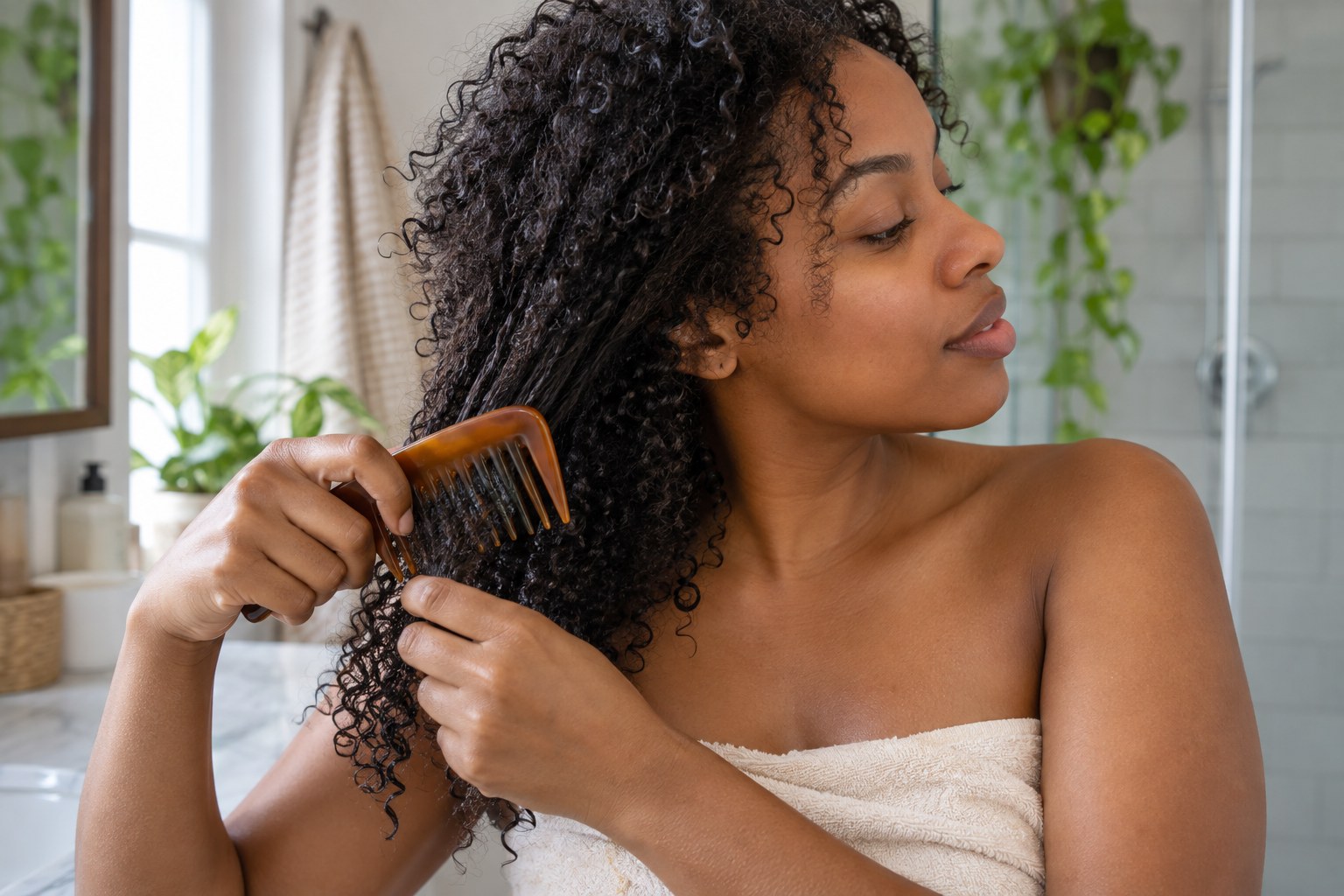
Illustration generated with AI for UpCare Health. It does not depict a study participant or a clinical result.
You clean your brush and find more hair than expected. Before changing shampoo or buying a supplement, it helps to ask a more specific question: are hairs being shed, or are the strands being damaged?
The same brush can collect hair for different reasons. A photograph of the collection cannot reliably identify the cause. The distinction matters because gentler styling and treatment for a hair-loss condition answer different problems.
Shedding is part of the hair cycle
The American Academy of Dermatology describes daily shedding as normal. Excessive shedding can follow illness, childbirth or a stressful event, sometimes with a delay of several months. It also distinguishes shedding from conditions that stop hair growing; both can occur together.1
Finding hair during a routine does not, by itself, prove that the routine caused the change. Try describing what you have noticed without deciding on a diagnosis: when it began, whether your hair looks less full, and whether there were recent health or medication changes.
Breakage calls for a look at handling
Hair-care practices can damage the shaft. AAD guidance recommends avoiding rubbing shampoo through the lengths, rough towel drying and excessive heat. Tight styles and repeated pulling also deserve attention.3
This makes your routine a useful place to review, rather than something to blame yourself for. Consider one manageable change: use less heat, loosen a pulling style or replace vigorous towel rubbing with gentle absorption.
A gentler wash routine
AAD recommends choosing washing frequency around your hair type and how dirty or oily it becomes. Apply shampoo mainly to the scalp, use conditioner, and detangle gently. Wet hair needs particular care; the best approach differs for straight and tightly curled hair.2
Those measures are about protecting hair. They should not be presented as a guaranteed way to regrow it. Keep expectations separate: easier detangling is a useful result, but it does not establish that an underlying shedding problem has resolved.
When to ask for help
If the change worries you, a dermatologist can distinguish shedding from other forms of loss and investigate possible causes. Do not stop a prescribed medicine on your own because you suspect a connection.1
Bring a short timeline and your questions. You do not need to arrive with a diagnosis or an exact count of every strand. Research and professional guidance offer a starting point; your circumstances determine the next step.
A quick check-in
Did you find this story useful?
Sources
For general information. This story does not provide a diagnosis or replace individual medical advice.