Wellbeing
Can a short nature break help with stress?
A small study linked time in nature with changes in a stress biomarker. Here is what the often-mentioned 20-minute break can—and cannot—promise.
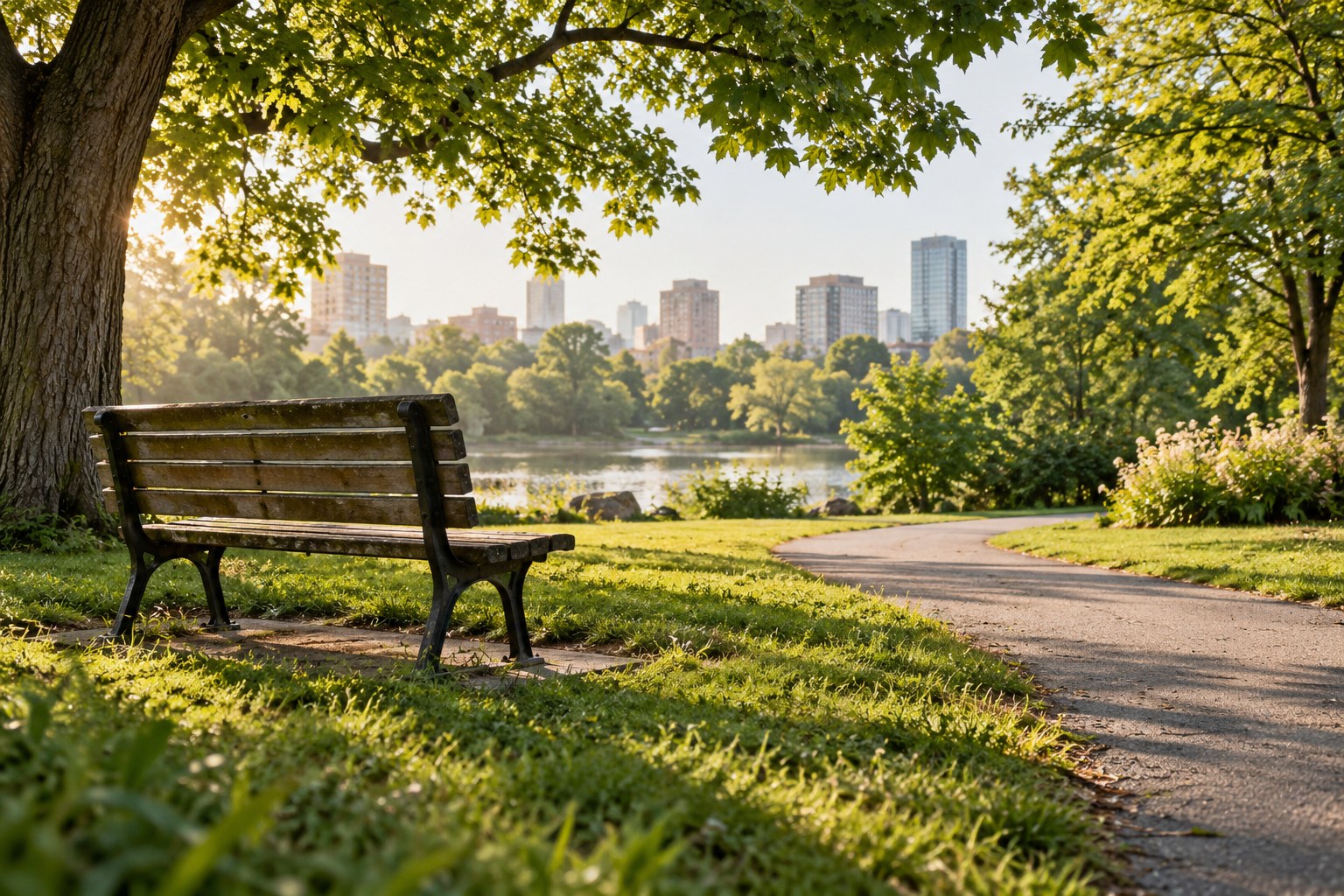
Illustration generated with AI for UpCare Health. It does not depict a study participant or a clinical result.
You have a gap between tasks, but not enough time for a long walk. Is sitting somewhere green still worth trying? A small study offers an interesting clue, although it cannot prescribe the perfect break for everyone.
What researchers measured
In a 2019 study, 36 urban residents were asked to spend at least ten minutes in a place that felt connected to nature, at least three times weekly, over eight weeks. They chose the location and duration. Researchers collected saliva before and after selected visits.1
After accounting for the usual daily pattern in cortisol, longer visits were associated with larger decreases in this stress-related hormone. The estimated reduction per minute was most efficient around 20 to 30 minutes. Participants could sit or walk.1
Why 20 minutes is not a magic dose
This was a small study without a randomized comparison group taking an equivalent non-nature break. It cannot fully separate nature from resting, expectations or other circumstances. A change in salivary cortisol also does not establish lasting mental-health improvement or treatment of an anxiety disorder.1
The useful interpretation is modest: the findings support further investigation of brief nature visits. They do not mean that a shorter break fails, or that everyone needs a timer and a particular destination.
Try a break without turning it into another task
If it appeals to you, choose somewhere accessible and comfortable: perhaps a nearby garden or a familiar bench with trees in view. Decide what is realistic today. You do not need to recreate the research protocol to enjoy a pause, and doing so would not turn your experience into a clinical test.
Here is an informal reflection you could try: before the break, write one word about how you feel. Afterwards, write another. Did the setting feel pleasant, distracting or inconvenient? That observation describes your experience; it does not measure your cortisol or prove a health effect.
Let the setting fit your life
Access, weather, mobility and personal safety shape what is practical. If the outing becomes another obligation, reconsider the plan. You might prefer a different place, a different time or another way to pause.
A nature break can be something you enjoy without carrying a promise to fix everything. Treat the research as an invitation to be curious, and your own response as information rather than a pass-or-fail result.
A quick check-in
Did you find this story useful?
Sources
For general information. This story does not provide a diagnosis or replace individual medical advice.