Wellbeing
Does sleeping in on weekends shift your body clock?
Learn what social jet lag means, what sleep-timing studies can show and how to make weekend sleep more consistent without sacrificing needed rest.
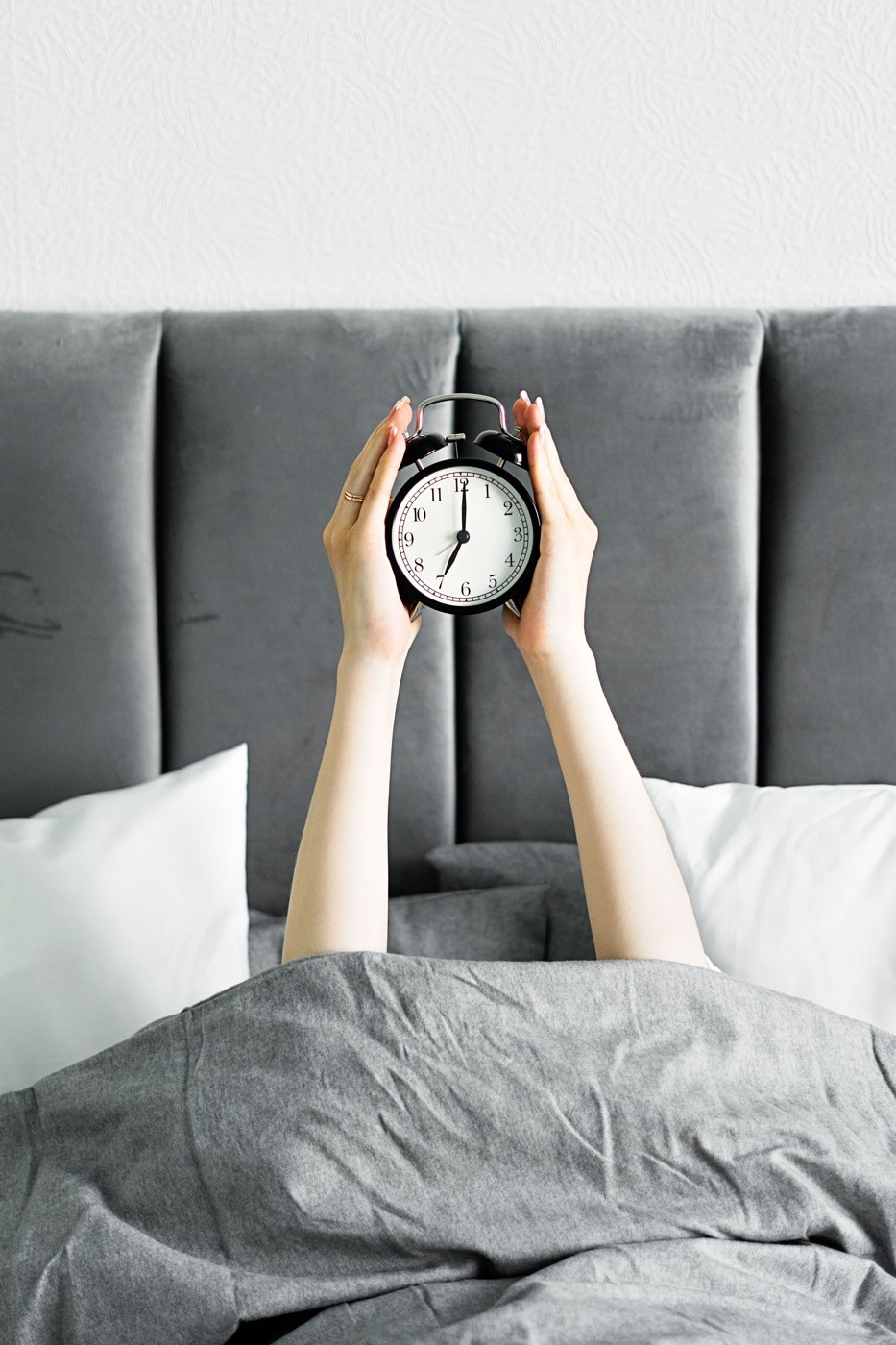
Photo: Anastasiya Vragova / Pexels. Used under the Pexels license. Illustrative stock photograph; people shown are not study participants and do not endorse this story.
You stay up later on Friday, sleep until midmorning on Saturday and then find Sunday bedtime surprisingly difficult. The weekend has not necessarily “broken” your sleep. It may simply have moved your sleep schedule away from the one Monday requires.
Sleeping in can be a response to real sleep loss. It can also accompany changes in light exposure and bedtime that influence circadian timing. How long you sleep and when you sleep are related, but separate, questions.
What is social jet lag?
Researchers use social jet lag to describe a mismatch between sleep timing on workdays and free days. The original 2006 study explored this in 501 volunteers using questionnaires about sleep and daily schedules.1 One common measure compares the midpoint of sleep in each setting.
For example, sleeping from 11 p.m. to 7 a.m. puts the midpoint at 3 a.m. Sleeping from 1 a.m. to 9 a.m. moves it to 5 a.m.: a two-hour difference, even though both nights contain eight hours. This is a description of timing, not a diagnosis or a test of your discipline.
Your preferred timing, or chronotype, matters too. An evening-oriented person facing an early work start may have a larger mismatch. Jobs, school schedules and family responsibilities help create the pattern; it is not simply a personal choice.
Does a timing difference cause health problems?
In a 2015 study of 447 working adults, larger differences between workday and free-day sleep timing were associated with less favorable metabolic measures, including insulin resistance and triglycerides.2 Sleep was measured with activity monitors. But this was observational: it cannot establish that sleeping late caused those differences. Other behaviors and circumstances may contribute, even after statistical adjustments.
A small 2019 laboratory experiment involving repeated sleep restriction found a delay in circadian phase during a recovery weekend.3 That makes a timing shift biologically plausible. Its tightly controlled, short protocol does not tell us that every lie-in shifts every person's clock, or predicts their long-term health.
Consistency with room for real life
NHLBI suggests keeping weekday and weekend sleep schedules within about an hour when possible.4 Treat that as a flexible target. If you are already short of sleep, enforcing an early alarm without making space for enough rest can preserve the shortage.
Experiment with smaller changes rather than a dramatic reset: a somewhat steadier wake time, daylight after waking and a quieter, dimmer evening. Notice whether a late bedtime is a social choice, a response to work, or simply when you naturally feel sleepy. Shift workers and caregivers may need a different plan.
One late night is not a failure. If Sunday nights repeatedly feel difficult, look at the whole week's timing and sleep opportunity. Persistent problems deserve individual advice, rather than progressively stricter rules.
What does that mean for you?
Research offers guidance from population patterns and controlled experiments; it cannot set the perfect weekend alarm for you. Notice how schedule changes affect your energy, emotions and ease of falling asleep. Individual responses vary, and feeling okay is useful information alongside the evidence. Aim for enough rest and a routine that fits your life, rather than making consistency a source of anxiety.
A quick check-in
Did you find this story useful?
Sources
- Wittmann et al. (2006). Social jetlag: misalignment of biological and social time. Chronobiology International.
- Wong et al. (2015). Social Jetlag, Chronotype, and Cardiometabolic Risk. The Journal of Clinical Endocrinology & Metabolism.
- Depner et al. (2019). Ad libitum Weekend Recovery Sleep Fails to Prevent Metabolic Dysregulation during a Repeating Pattern of Insufficient Sleep and Weekend Recovery Sleep. Current Biology.
- National Heart, Lung, and Blood Institute. Healthy sleep habits.
For general information. This story does not provide a diagnosis or replace individual medical advice.